
Home care has become an important part of everyday health management. Whether you are caring for an aging parent, recovering from an illness or injury, managing a chronic condition, or simply preparing for unexpected health needs, having the right healthcare supplies at home can make daily care easier and safer.
But what healthcare supplies do you actually need in 2026?
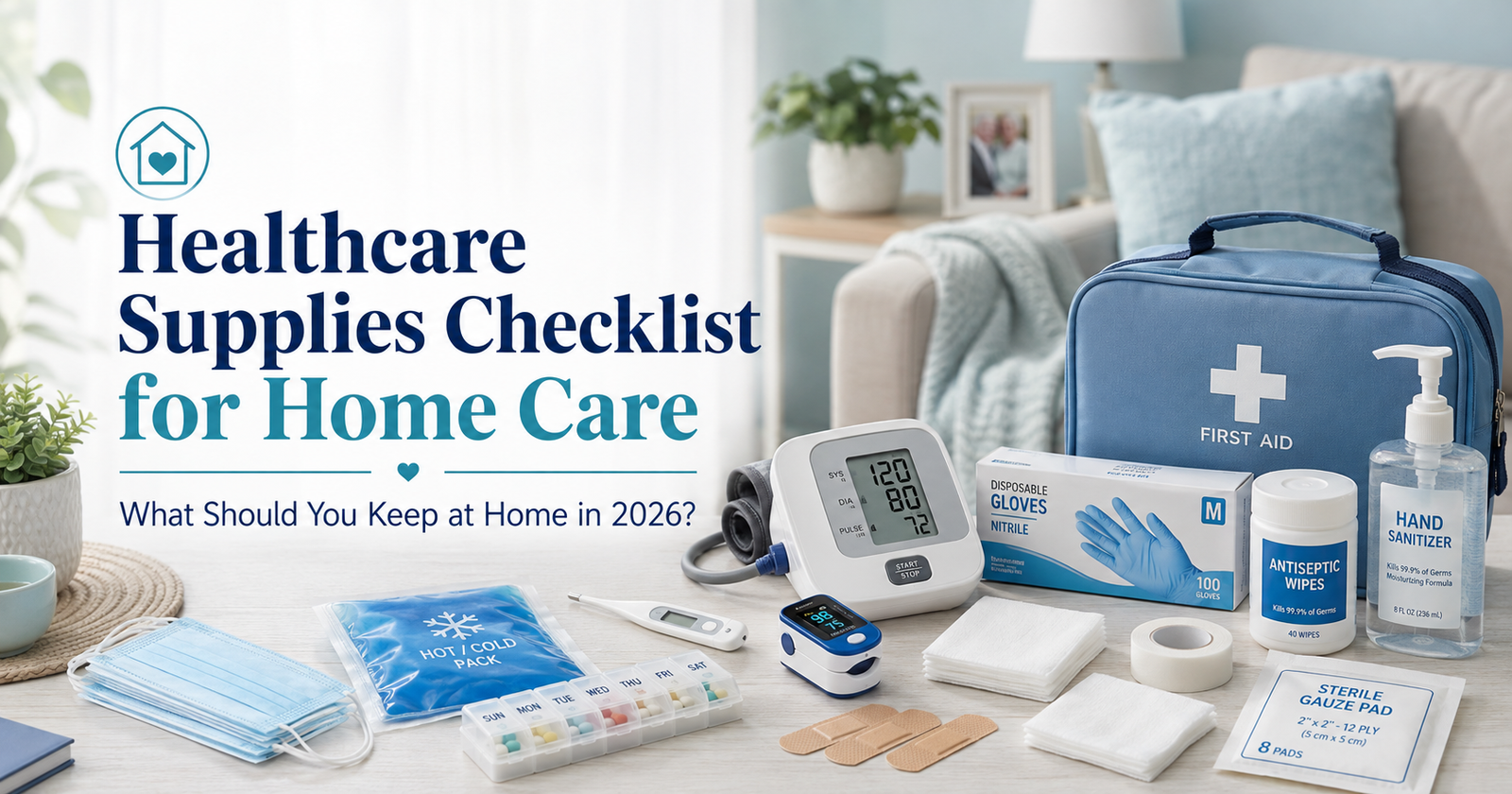
The answer depends on your household, but a well-planned home healthcare kit should cover basic first aid, personal care, mobility, monitoring, wound care, and infection prevention. This checklist can help you identify the essentials without filling your home with unnecessary medical products.
What Healthcare Supplies Should You Keep at Home?
A basic home healthcare supply collection should include items for first aid, health monitoring, wound care, personal hygiene, and everyday assistance.
Here is a practical checklist:
- Digital thermometer
- First-aid kit
- Adhesive bandages
- Sterile gauze pads
- Medical tape
- Antiseptic wipes
- Disposable gloves
- Hand sanitizer
- Digital blood pressure monitor
- Pulse oximeter
- Disposable underpads
- Adult incontinence products, when needed
- Alcohol prep pads
- Hot and cold packs
- Pill organizer
- Face masks
- Basic mobility or support equipment when appropriate
You do not necessarily need every item on this list. Choose supplies based on the health needs and age of the people in your household.
Why Is a Home Healthcare Supply Kit Important?
A home healthcare kit gives you quick access to basic supplies when minor health problems occur.
For example, a small cut may require gauze and medical tape, while a fever may require a thermometer. Having these items available can save time and help you respond appropriately while deciding whether professional medical care is necessary.
A home supply kit is not a replacement for a doctor, emergency department, or professional caregiver. It is simply a practical resource for everyday situations.
1. First-Aid Supplies
First-aid products are among the most useful healthcare supplies to keep at home.
Your first-aid collection should include:
- Adhesive bandages in different sizes
- Sterile gauze
- Medical adhesive tape
- Antiseptic wipes
- Disposable gloves
- Tweezers
- Scissors
- Instant cold packs
- Wound dressings
- Elastic bandages
Keep these supplies together in an easily accessible container so that you can find them quickly when needed.
Important: For serious bleeding, deep wounds, severe burns, difficulty breathing, chest pain, or other emergencies, seek professional medical help instead of relying on a home first-aid kit.
2. Health Monitoring Equipment
Home monitoring equipment can help people keep track of certain health measurements between medical appointments.
Useful equipment may include:
Digital Thermometer
A thermometer can help you check body temperature when someone feels unwell.
Blood Pressure Monitor
A home blood pressure monitor may be useful for people who have been advised by a healthcare professional to monitor their blood pressure.
Pulse Oximeter
A pulse oximeter measures blood oxygen saturation and pulse rate. It can be useful in certain situations, but readings should always be interpreted alongside symptoms and professional medical advice.
Tip: If you regularly use monitoring equipment, learn how to use it correctly and follow the manufacturer’s instructions.
3. Wound Care Supplies
Small cuts, scrapes, and minor wounds can happen at any time, particularly in households with children, older adults, or people recovering from procedures.
A basic wound-care collection may include:
- Sterile gauze pads
- Non-stick wound dressings
- Medical tape
- Adhesive bandages
- Antiseptic products
- Disposable gloves
- Cotton swabs
- Wound-cleaning supplies
Keep sterile products sealed until they are needed to reduce contamination.
4. Personal Hygiene and Infection-Control Supplies
Good hygiene is an important part of home care, particularly when someone is sick or requires assistance with daily activities.
Consider keeping:
- Hand sanitizer
- Disposable gloves
- Face masks
- Disinfecting wipes
- Disposable towels
- Personal cleansing products
- Protective underpads
- Disposable bags for waste
These supplies can make caregiving routines more convenient while supporting good hygiene practices.
Healthcare Supplies for Seniors: What Should You Consider?
Older adults may have different home-care needs than younger family members.
Depending on individual circumstances, useful supplies can include:
- Blood pressure monitoring equipment
- Non-slip bathroom aids
- Mobility support products
- Incontinence supplies
- Disposable underpads
- Personal hygiene products
- Medication organizers
- Easy-to-use thermometers
- Grab bars or other approved safety equipment
Before purchasing specialized equipment, consider the person’s mobility, medical needs, living environment, and recommendations from their healthcare professional.
Healthcare Supplies vs. Regular Household Products: What’s the Difference?
Not every household product is an appropriate substitute for a healthcare supply.
| Healthcare Supply | Regular Household Alternative |
| Sterile gauze | Paper towel |
| Medical tape | Regular adhesive tape |
| Digital thermometer | Guessing based on touch |
| Disposable medical gloves | Household cleaning gloves |
| Wound dressing | Tissue or cloth |
| Medical underpad | Regular towel |
Healthcare products are designed for specific care situations, while ordinary household items may not provide the same level of cleanliness, protection, comfort, or intended functionality.
For wound care and other health-related situations, use products specifically designed for their intended purpose whenever possible.
How Often Should You Check Your Home Healthcare Supplies?
You should review your healthcare supplies regularly rather than waiting until something is needed.
A simple monthly or quarterly check can help you:
- Check expiration dates.
- Replace opened or damaged sterile products.
- Make sure packaging is intact.
- Restock frequently used items.
- Remove products you no longer need.
- Check batteries in electronic devices.
- Confirm that monitoring equipment is functioning correctly.
Store supplies in a cool, dry, clean, and easily accessible location, while keeping medications and potentially dangerous products safely away from children.
How Do You Build a Home Healthcare Kit on a Budget?
You do not need to purchase every healthcare product at once.
Start with the essentials and gradually add supplies according to your household’s needs.
Start With These Essentials:
- First-aid supplies
- Thermometer
- Disposable gloves
- Hand sanitizer
- Gauze and medical tape
- Basic wound dressings
- Cold pack
- Common personal-care supplies
Then consider specialized products such as blood pressure monitors, mobility aids, incontinence products, or other home-care equipment if they are relevant to your family’s needs.
The goal is preparedness, not overstocking.
Where Should You Store Healthcare Supplies?
The best storage location should be clean, dry, organized, and easy for responsible adults to access.
Create separate sections for:
- First aid
- Wound care
- Monitoring devices
- Personal hygiene
- Incontinence supplies
- Protective equipment
Use clearly labeled containers so caregivers and family members can quickly identify what they need.
Avoid storing supplies in damp areas such as bathrooms unless the product’s packaging specifically allows it.
What Healthcare Supplies Should You Buy in 2026?
In 2026, consumers should focus less on buying the largest possible collection and more on choosing appropriate, reliable, easy-to-use supplies.
When shopping for home healthcare products, look for:
- Clear instructions
- Appropriate sizing
- Quality packaging
- Reliable manufacturers
- Products suited to the user’s specific needs
- Easy-to-clean or disposable options when appropriate
- Proper storage requirements
For medical devices, follow the manufacturer’s instructions and consider professional guidance when you are unsure which product is appropriate.
Final Home Healthcare Checklist
Before considering your home-care supplies complete, ask yourself:
Do we have basic first-aid supplies?
Can we check body temperature?
Do we have appropriate wound-care products?
Do we have basic hygiene and protective supplies?
Do we have the supplies needed for older adults or family members with specific care needs?
Are our supplies organized and within their usable dates?
If the answer is yes, your household is better prepared for many everyday home-care situations.
Final Takeaway
The best home healthcare supply kit is practical, organized, and tailored to your household’s needs. Start with first-aid, hygiene, wound-care, and basic monitoring supplies, then add specialized products based on age, mobility, recovery, or ongoing care requirements.
Most importantly, remember that home healthcare supplies are tools for everyday support not substitutes for professional medical advice or emergency care.