
Caring for a loved one at home can be rewarding, but even a small cut, scrape, or dressing change can become stressful when the right supplies are missing. For family caregivers, seniors, and people recovering from surgery, keeping essential wound care supplies at home helps make routine care more organized, hygienic, and convenient.
The good news is that you do not need a complicated medical setup to prepare for everyday wound care. A well-organized collection of basic first-aid items, clean dressings, protective equipment, and wound-care essentials can help caregivers respond to minor injuries and follow professional treatment instructions.
The key is to keep the right supplies ready, understand when to use them, and know when a wound needs medical attention.
Why Are Wound Care Supplies Important at Home?
Wound care supplies help caregivers clean minor wounds, protect injured skin, manage dressings, and reduce the risk of contamination. They are especially useful for households caring for older adults, people with limited mobility, or patients recovering after medical procedures.
Without the right supplies, caregivers may struggle to replace a dressing, protect a wound from dirt, or maintain proper hygiene during routine care.
A prepared home wound care kit can help you:
- Keep wound care items organized and easy to find.
- Maintain hand hygiene before and after dressing changes.
- Protect minor wounds with suitable dressings.
- Follow a healthcare professional’s wound-care instructions.
- Monitor changes in a wound’s appearance between appointments.
Remember that home wound care supplies are not a replacement for medical assessment. Deep wounds, serious burns, infected wounds, and certain chronic wounds require professional evaluation.
1. Sterile Gauze Pads: An Essential Wound Care Supply
Sterile gauze pads are soft, absorbent materials used to cover wounds and absorb blood or drainage. They are among the most useful wound care supplies to keep at home because they can support basic first aid and routine dressing changes.
What should caregivers keep ready?
- Sterile gauze pads in several sizes.
- Larger sterile dressings for wider wound areas.
- Extra supplies for scheduled dressing changes.
- Clean, dry storage for unopened packages.
Sterile gauze can help absorb fluid and protect a wound when used appropriately. For a minor cut, clean gauze can also be used to apply direct pressure to control bleeding.
Choose a dressing according to the wound’s size, drainage, and care instructions. Avoid placing loose cotton fibers directly on an open wound.
2. Non-Stick Dressings and Adhesive Bandages
Non-stick dressings are designed to reduce sticking to the wound surface, making dressing changes more comfortable. Adhesive bandages are useful for covering small cuts and scrapes.
Caregivers should keep both because different injuries require different levels of coverage.
For example:
- Adhesive bandages: Suitable for many minor cuts and scrapes.
- Non-stick sterile dressings: Useful when a wound needs a protective covering that is less likely to adhere to its surface.
- Larger wound dressings: Helpful when a small adhesive bandage cannot cover the area adequately.
A dressing should fit the wound without restricting circulation or irritating the surrounding skin. If a dressing sticks, do not pull it off forcefully; follow the product instructions or the healthcare professional’s guidance.
For surgical wounds, use only the dressing type and replacement schedule recommended by the treating clinician.
3. Disposable Gloves for Safer Wound Care
Disposable gloves help reduce direct contact with blood, wound drainage, and other potentially infectious material. They are particularly useful when caregivers change dressings or clean a wound.
Keep a supply of appropriately sized, non-latex disposable gloves if latex sensitivity is a concern.
However, gloves alone do not guarantee safe wound care. Caregivers should also:
- Wash their hands before putting on gloves.
- Avoid touching the wound unnecessarily.
- Use clean supplies for each dressing change.
- Remove gloves safely after the procedure.
- Wash their hands again afterward.
Gloves should never be washed and reused unless a specific product is explicitly designed for reuse and appropriate protocols are followed. For routine home wound care, disposable gloves are generally the practical choice.
4. Saline Solution and Other Wound-Cleaning Supplies
Cleaning is an important part of wound care because dirt and contaminants can interfere with healing. For many minor cuts and scrapes, clean running water and mild soap for the surrounding skin are sufficient.
Sterile saline solution may also be useful when recommended for cleaning a wound or following a specific dressing-care plan.
A caregiver’s basic cleaning supplies may include:
- Sterile saline solution, when appropriate.
- Access to clean running water.
- Mild soap for handwashing and surrounding skin.
- Clean gauze for gently drying the surrounding area.
- A clean disposable container for used materials, where appropriate.
Important: Do not assume that stronger cleaning products are better. Alcohol, hydrogen peroxide, and iodine preparations can damage healing tissue in some circumstances. Do not apply them to an open wound unless a healthcare professional specifically recommends the product and method.
For surgical wounds, pressure injuries, and chronic ulcers, follow the clinician’s cleaning instructions rather than experimenting with different solutions.
5. Medical Tape and Bandage Securing Supplies
Medical tape helps hold suitable dressings in place. It can be particularly useful when a dressing needs additional support or when the wound is located somewhere that makes ordinary adhesive bandages difficult to use.
Caregivers may benefit from keeping:
- Medical adhesive tape.
- A tape option designed for sensitive skin.
- Scissors reserved for clean dressing materials.
- Suitable retention bandages, when recommended.
Avoid wrapping bandages so tightly that they cause pain, numbness, tingling, swelling, or changes in skin colour. These symptoms can indicate that circulation is being affected.
If the wound is on a hand, foot, or limb, check that the dressing and any securing bandage do not interfere with normal circulation.
6. Wound Care Products for Specific Needs
Not every wound requires the same product. Some wounds need only a simple protective dressing, while others require specialized materials selected by a healthcare professional.
Depending on the household’s needs, caregivers may need access to:
- Absorbent dressings: For wounds that produce drainage.
- Non-adherent wound contact layers: To help prevent a dressing from sticking to the wound.
- Moisture-managing dressings: For particular wounds where moisture balance is important.
- Skin barrier products: To protect surrounding skin when recommended.
- Compression products: Only when prescribed or recommended for the person’s specific condition and used with appropriate guidance.
These products are not interchangeable. For example, a dressing appropriate for a minor scrape may not be suitable for a deep wound or a pressure ulcer.
If someone has a diabetic foot wound, a pressure injury, or a wound that is not healing, ask a healthcare professional which wound care supplies are appropriate. Avoid treating these wounds as ordinary household cuts.
7. Tweezers, Scissors, and Other Useful Tools
A few practical tools can make routine wound care easier, but they must be used appropriately.
Useful items include:
- Clean scissors for cutting tape or dressing material.
- Tweezers for certain superficial splinters when they can be removed safely.
- A digital thermometer for checking body temperature when someone feels unwell.
- A small waste container or disposable bags for used dressings.
- A written wound-care checklist supplied by the healthcare professional.
Never use household scissors or tweezers to probe a wound, remove deeply embedded material, cut away damaged tissue, or remove a deeply stuck object. These situations require professional assessment.
For a deep puncture wound, an animal or human bite, or a wound containing foreign material, seek medical advice promptly rather than attempting to manage it with home tools.
8. Pain Management and Comfort Supplies
Wound care can sometimes cause discomfort, especially when a dressing needs to be changed regularly. Keeping the right comfort supplies available can help caregivers make the process less stressful.
Depending on the person’s needs, consider keeping:
- A clean pillow or cushion to support the injured area.
- A comfortable chair or suitable surface for dressing changes.
- A written medication schedule, if pain medication has been prescribed.
- A thermometer to monitor body temperature when needed.
Do not apply numbing creams, pain-relief ointments, or other medications directly to an open wound unless a healthcare professional advises you to do so.
If pain becomes worse instead of improving, or the wound becomes increasingly swollen, warm, or tender, contact a healthcare professional.
9. Wound Care Supplies Checklist for Every Caregiver
A simple checklist makes it easier to identify missing items before an injury or dressing change occurs.
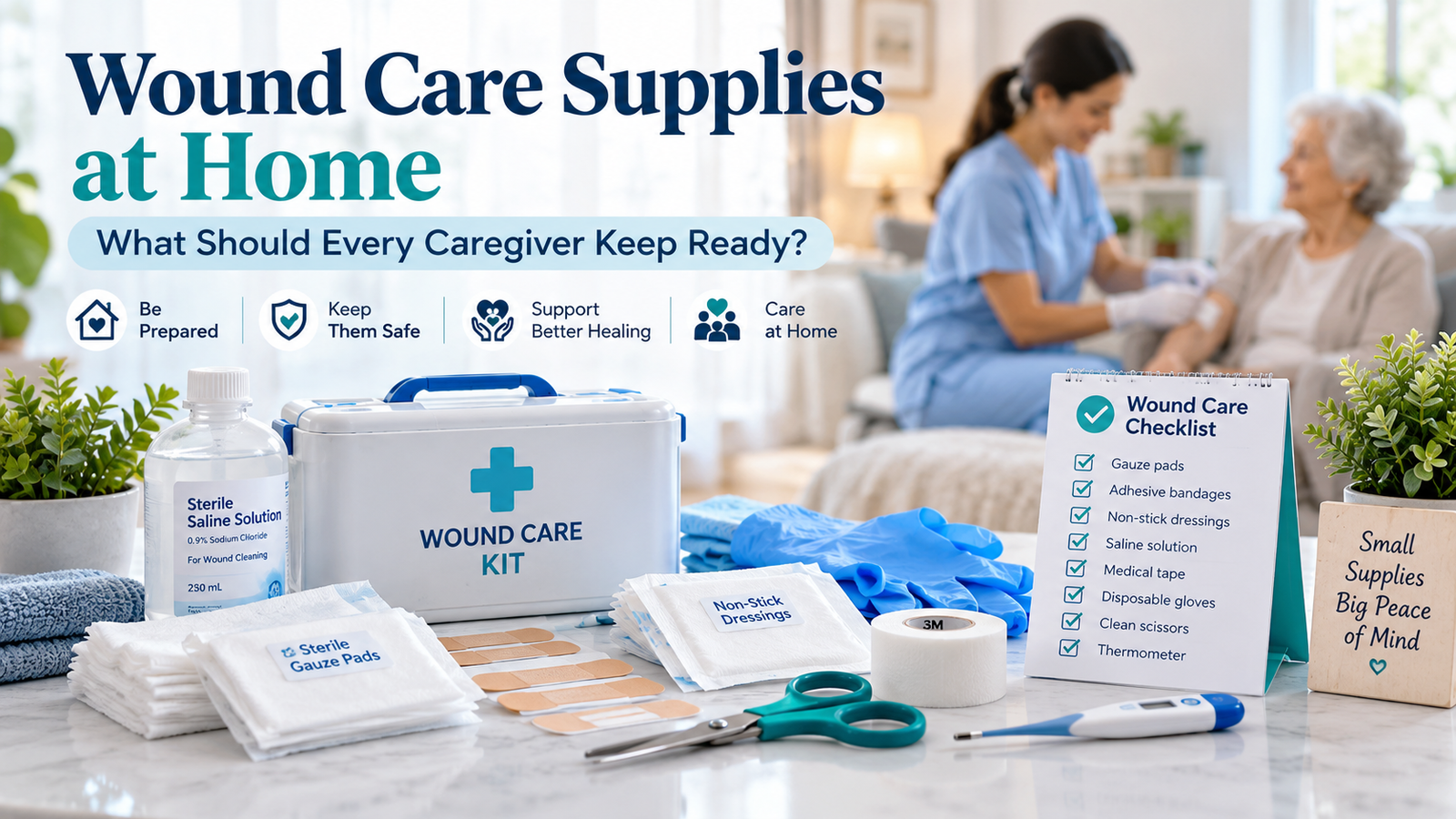
Here is a practical home wound care supplies checklist:
- Disposable gloves.
- Sterile gauze pads.
- Adhesive bandages in different sizes.
- Non-stick sterile dressings.
- Medical tape.
- Clean water and mild soap.
- Sterile saline solution, when appropriate.
- Clean scissors for dressing materials.
- Disposable waste bags.
- A thermometer.
- Written instructions for existing wounds.
- Emergency contact information and relevant medical details.
You do not need every specialized product for every household. The right supplies depend on whether you are preparing for occasional minor injuries, supporting an older adult, or caring for someone with an existing wound.
If you are supporting a family member after surgery or managing a chronic wound, ask the healthcare team to create a personalized supply list.
10. Sterile Gauze vs. Adhesive Bandages: Which Should You Choose?
Sterile gauze and adhesive bandages both help protect wounds, but they serve different purposes. Choosing the right option depends on the size, location, and condition of the injury.
| Feature | Sterile gauze | Adhesive bandage |
| Best use | Covering wounds and absorbing drainage | Covering many small cuts and scrapes |
| Size options | Available in various sizes | Commonly used for smaller injuries |
| Securing method | Often requires tape or a suitable wrap | Usually has adhesive edges |
| Drainage management | Suitable options can absorb more fluid | Usually intended for minor wounds |
| Dressing changes | Depends on the wound and dressing instructions | Depends on the injury and product instructions |
Which option is better?
For a small, clean cut, an appropriately sized adhesive bandage may be sufficient. For a wound that needs a larger covering or more absorbency, sterile gauze or a suitable wound dressing may be more appropriate.
Neither option is universally better. A wound that is deep, infected, unusually painful, or slow to heal needs professional assessment rather than simply a different bandage.
11. A Real-Life Example: Preparing for an Older Parent’s Wound Care
Imagine a caregiver named Sarah who helps her 76-year-old father at home. He has fragile skin and occasionally develops minor scrapes when moving around the house.
One afternoon, Sarah notices a small scrape on his forearm. Instead of searching through different drawers, she brings out her organized wound care kit.
She washes her hands, puts on disposable gloves, gently cleans the minor wound with clean water, and uses an appropriate clean dressing to protect it. She then disposes of the used materials safely and washes her hands again.
Because her father has fragile skin, she avoids pulling adhesive tape off forcefully. She also checks the wound for changes and follows any existing care instructions.
A few days later, Sarah notices that another area of skin has become increasingly red and tender. Rather than assuming that it is another minor scrape, she contacts his healthcare provider for advice.
This example illustrates why preparation matters.
Having supplies ready helps with routine care, but knowing when to seek professional help is just as important.
This is an illustrative example, not a report of an actual patient’s experience.
12. How Should Caregivers Store and Maintain Wound Care Supplies?
Wound care supplies should be stored in a clean, dry, organized place where caregivers can reach them quickly. Proper storage also helps prevent unopened sterile products from becoming damaged or contaminated.
Follow these simple practices:
- Choose one storage location. Use a dedicated box, cupboard, or first-aid organizer.
- Keep sterile products sealed. Do not open gauze or dressings until they are needed.
- Check expiry dates. Replace expired products according to the manufacturer’s instructions.
- Inspect packaging. Discard sterile products if their packaging is torn, wet, or compromised.
- Restock after use. Replace items before supplies run out.
- Keep supplies away from children and pets. Store medications and sharp tools securely.
- Review the kit regularly. A quick monthly check can help identify missing or damaged items.
If multiple family members provide care, let everyone know where the supplies are stored and how to access the written wound-care instructions.
13. When Is Home Wound Care Not Enough?
Home wound care is generally appropriate for many minor injuries, but some wounds require urgent medical attention.
Seek emergency assistance if bleeding is severe or does not stop after about 10 minutes of firm, continuous direct pressure. Do not delay emergency care for a serious injury.
Contact a healthcare professional promptly if:
- The wound is deep, gaping, or large.
- An object is embedded in the wound.
- The injury is caused by a human or animal bite.
- Redness, warmth, swelling, or pain is increasing.
- Pus, unusual drainage, or a red streak develops.
- The person develops a fever or feels increasingly unwell.
- A wound is not healing as expected.
People with diabetes, poor circulation, reduced sensation, or weakened immune systems may need earlier assessment, particularly for foot wounds and pressure injuries.
Do not attempt to manage a suspected infection simply by changing dressings more frequently or applying over-the-counter products.
14. How Can a Pharmacy Help You Choose Wound Care Supplies?
A pharmacy can help caregivers identify suitable basic wound care supplies and understand product instructions. This can be especially helpful when you are unsure whether you need sterile gauze, non-stick dressings, medical tape, or other first-aid essentials.
Before purchasing supplies, consider these questions:
- What type of wound are you preparing to care for?
- Does the person already have a clinician-approved wound-care plan?
- How frequently will dressings need to be changed?
- Does the person have sensitive skin or known product allergies?
- Are specialized dressings required?
For an existing surgical wound, chronic ulcer, or pressure injury, consult the treating healthcare professional about the exact products required.
At Quality Care Pharmacy, caregivers can explore available healthcare supplies and seek guidance on selecting products appropriate to their needs.
Explore the Healthcare Supplies page to learn more about available supplies for home care.
Conclusion: Prepare Your Home Before Wound Care Is Needed
Keeping essential wound care supplies at home helps caregivers respond to minor injuries, organize dressing changes, and follow care instructions with greater confidence.
Start with the basics: disposable gloves, sterile gauze, suitable dressings, medical tape, cleaning supplies, and a dedicated storage space. Add specialized products only when they are appropriate for the person’s needs and recommended care plan.
Most importantly, remember that supplies are only one part of safe wound care. Good hand hygiene, careful observation, proper product selection, and timely medical attention all contribute to better care.
A little preparation today can make everyday caregiving more manageable tomorrow.
Keep Your Home Ready with Essential Wound Care Supplies
Being prepared for unexpected cuts, scrapes, or routine dressing changes can make everyday caregiving easier. From sterile gauze and non-stick dressings to disposable gloves and medical tape, having the right wound care supplies at home helps you stay organized and follow recommended care instructions.
At Quality Care Pharmacy, explore healthcare supplies to help support your home care needs. Visit our Healthcare Supplies page to learn more about available products and find the essentials for your caregiving routine.
Prepare today for more confident care tomorrow!