
Diabetes can develop gradually, and some people may not notice obvious symptoms at first. However, certain warning signs can indicate that your blood sugar is consistently higher than normal.
Recognizing these symptoms early can encourage you to get your blood sugar checked and discuss your results with a healthcare professional.
What Are the Warning Signs of Diabetes?
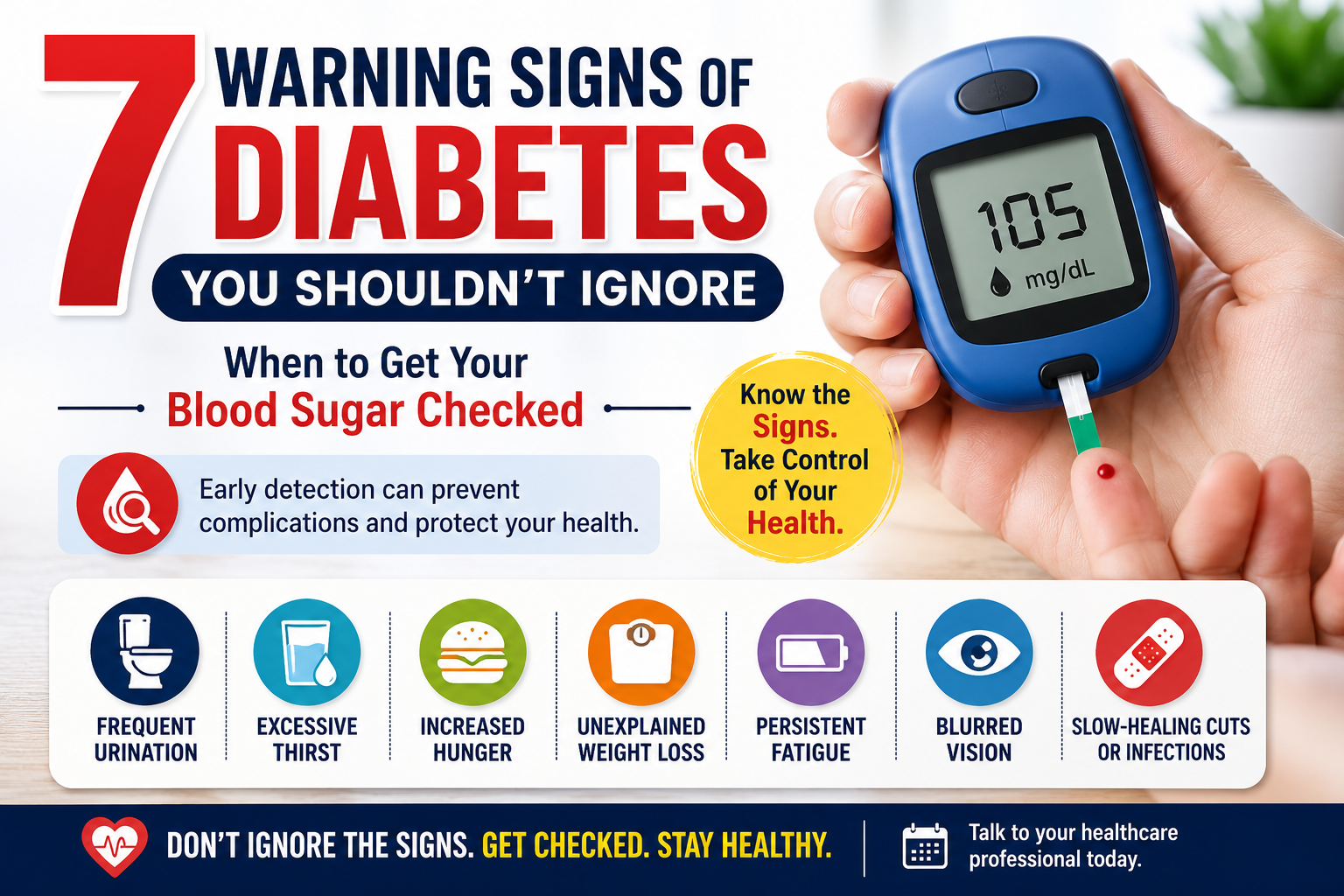
The most common warning signs of diabetes include frequent urination, excessive thirst, increased hunger, unexplained weight loss, persistent fatigue, blurred vision, and slow-healing cuts or infections.
Having one of these symptoms does not automatically mean you have diabetes. But if several symptoms appear together or persist, getting your blood sugar tested is a sensible next step.
- Frequent Urination
Needing to urinate more often than usual can be an early warning sign of high blood sugar.
When blood glucose becomes too high, the kidneys work harder to remove excess glucose from the bloodstream. This can cause the body to produce more urine.
You may notice:
- More frequent bathroom trips
- Waking up several times during the night to urinate
- Producing larger amounts of urine than usual
- A noticeable change from your normal bathroom habits
Frequent urination can have many other causes, so it should not be used alone to diagnose diabetes.
- Constant or Unusual Thirst
Excessive thirst can occur when your body loses more fluid because of frequent urination.
If you find yourself drinking significantly more water than usual and still feeling thirsty, it may be worth discussing the symptom with a healthcare professional.
Pay attention if increased thirst occurs alongside frequent urination, fatigue, or unexplained weight changes.
- Feeling Hungry All the Time
Persistent or unusual hunger can sometimes occur when glucose is not being used effectively by the body’s cells.
Even though glucose is present in the bloodstream, problems with insulin production or insulin action can prevent the body from using it properly.
You might notice:
- Feeling hungry shortly after eating
- Increased appetite without an obvious reason
- Strong cravings or frequent snacking
- Hunger occurring together with other diabetes symptoms
Increased hunger can also be related to diet, exercise, sleep, stress, or other health conditions.
- Unexplained Weight Loss
Losing weight without intentionally changing your diet or exercise routine can be a warning sign that deserves medical attention.
When the body cannot effectively use glucose for energy, it may begin using stored fat and muscle instead.
Unexpected weight loss is particularly important when it happens alongside:
- Increased thirst
- Frequent urination
- Increased hunger
- Fatigue
Unexplained weight loss has many possible causes, so it is important not to assume diabetes is the reason without appropriate testing.
- Persistent Fatigue or Low Energy
Feeling unusually tired despite getting enough rest may be associated with high blood sugar.
When glucose cannot enter cells efficiently, the body may have difficulty getting the energy it needs.
Diabetes-related fatigue may feel different from ordinary tiredness. You may feel:
- Drained throughout the day
- Less productive than usual
- Tired even after sleeping
- Low on energy during routine activities
Fatigue is extremely common and can have numerous causes, including poor sleep, stress, anemia, infections, and other medical conditions.
- Blurred Vision
Temporary or persistent blurred vision can occur when changes in blood glucose affect the fluid balance in the eye.
Some people may notice that their vision becomes less sharp or seems to change unexpectedly.
Do not ignore significant or sudden changes in vision. If blurred vision develops suddenly or is severe, seek prompt medical evaluation.
Regular eye examinations are also important for people who have diabetes because prolonged high blood sugar can affect the eyes.
- Slow-Healing Cuts or Frequent Infections
Cuts, sores, or infections that seem to take longer than expected to heal can sometimes be associated with diabetes.
High blood sugar can affect circulation and the body’s ability to respond effectively to infections.
You may notice:
- Cuts taking longer to heal
- Repeated skin infections
- Frequent urinary tract infections
- Recurring fungal infections
- Persistent skin problems
These symptoms do not prove that you have diabetes, but recurring or slow-healing problems deserve professional evaluation.
Diabetes Symptoms vs. Everyday Symptoms: What’s the Difference?
Not every episode of thirst, tiredness, or hunger means you have diabetes. The key is to look at persistence, severity, and combinations of symptoms.
| Common Everyday Symptom | Possible Diabetes Warning Sign |
| Thirst after exercise | Persistent excessive thirst |
| Tired after a busy day | Ongoing unexplained fatigue |
| Hunger before meals | Frequent or unusually strong hunger |
| Occasional blurry vision | Recurrent or unexplained vision changes |
| Urinating more after drinking lots of fluids | Frequent urination without an obvious reason |
| Small cut healing normally | Cuts or infections that repeatedly heal slowly |
| Intentional weight loss | Weight loss without trying |
The important difference is that diabetes-related symptoms may persist, occur together, or have no obvious explanation.
When Should You Get Your Blood Sugar Checked?
You should consider getting your blood sugar checked if you have multiple diabetes symptoms, symptoms that persist, or risk factors for diabetes.
Testing can help determine whether your blood glucose is within a healthy range.
A healthcare professional may recommend tests such as:
- A1C test: Estimates your average blood glucose level over approximately the previous 2–3 months.
- Fasting blood glucose test: Measures blood glucose after fasting for a specified period.
- Oral glucose tolerance test: Measures how your body responds to glucose after drinking a glucose-containing solution.
- Random blood glucose test: Measures blood glucose at a specific time without necessarily requiring fasting.
Your healthcare provider can determine which test is appropriate based on your symptoms and health history.
Can You Have Diabetes Without Symptoms?
Yes. Type 2 diabetes can develop with few or no noticeable symptoms, particularly in its early stages.
This is one reason routine screening can be important for people who have risk factors.
You may feel completely normal while your blood glucose is elevated. Regular checkups can help identify abnormal blood sugar before noticeable symptoms develop.
Who Should Pay Extra Attention to Diabetes Warning Signs?
Certain factors can increase the likelihood of developing type 2 diabetes.
You may want to discuss diabetes screening with a healthcare professional if you have factors such as:
- A family history of type 2 diabetes
- Overweight or obesity
- High blood pressure
- Abnormal cholesterol or triglyceride levels
- A history of gestational diabetes
- Physical inactivity
- Increasing age
- A previous diagnosis of prediabetes
Having a risk factor does not mean you will develop diabetes. It simply means discussing appropriate screening with a healthcare professional may be worthwhile.
What Should You Do If You Notice These Symptoms?
Don’t try to diagnose diabetes based on symptoms alone. Get appropriate blood glucose testing and discuss the results with a healthcare professional.
A practical next step is:
- Write down the symptoms you’re experiencing.
- Note when they started and whether they are becoming more frequent.
- Make a healthcare appointment if symptoms persist or multiple warning signs occur.
- Ask whether blood glucose or diabetes screening is appropriate.
- Follow up based on your test results and healthcare professional’s advice.
Avoid relying on home blood glucose readings to diagnose diabetes unless a healthcare professional has advised you how to interpret them.
When Are Diabetes Symptoms an Emergency?
Some symptoms require urgent medical attention, especially when they are severe or develop rapidly.
Seek urgent medical care for symptoms such as:
- Severe vomiting
- Difficulty breathing
- Confusion or unusual drowsiness
- Severe weakness
- Fainting or loss of consciousness
- Signs of severe dehydration
These symptoms can occur with serious blood sugar abnormalities and should not be ignored.
The Bottom Line
The warning signs of diabetes can be easy to overlook because many are common symptoms that people experience for other reasons.
However, frequent urination, excessive thirst, increased hunger, unexplained weight loss, persistent fatigue, blurred vision, and slow-healing wounds or recurrent infections can be reasons to consider blood sugar testing especially when several symptoms occur together.
The only way to determine whether you have diabetes is through appropriate medical testing.
If you’re concerned about your symptoms or diabetes risk, speak with a qualified healthcare professional about whether blood glucose screening is right for you.
Concerned About Your Blood Sugar? Take the Next Step
Don’t ignore changes in your health. If you’re experiencing symptoms of diabetes or have concerns about your blood sugar, speaking with a healthcare professional can help you understand your risk and determine whether testing is appropriate.
Ready to take control of your health? Schedule a consultation with our pharmacy team to discuss your concerns, diabetes care options, and next steps.
👉 Book Your Appointment Today and take the first step toward better blood sugar management.