Quitting smoking is one of the most important steps you can take for your health—but knowing where to start can be difficult. Nicotine cravings, withdrawal symptoms, stress, and daily habits can make quitting feel overwhelming.
The good news? You don’t have to quit alone.
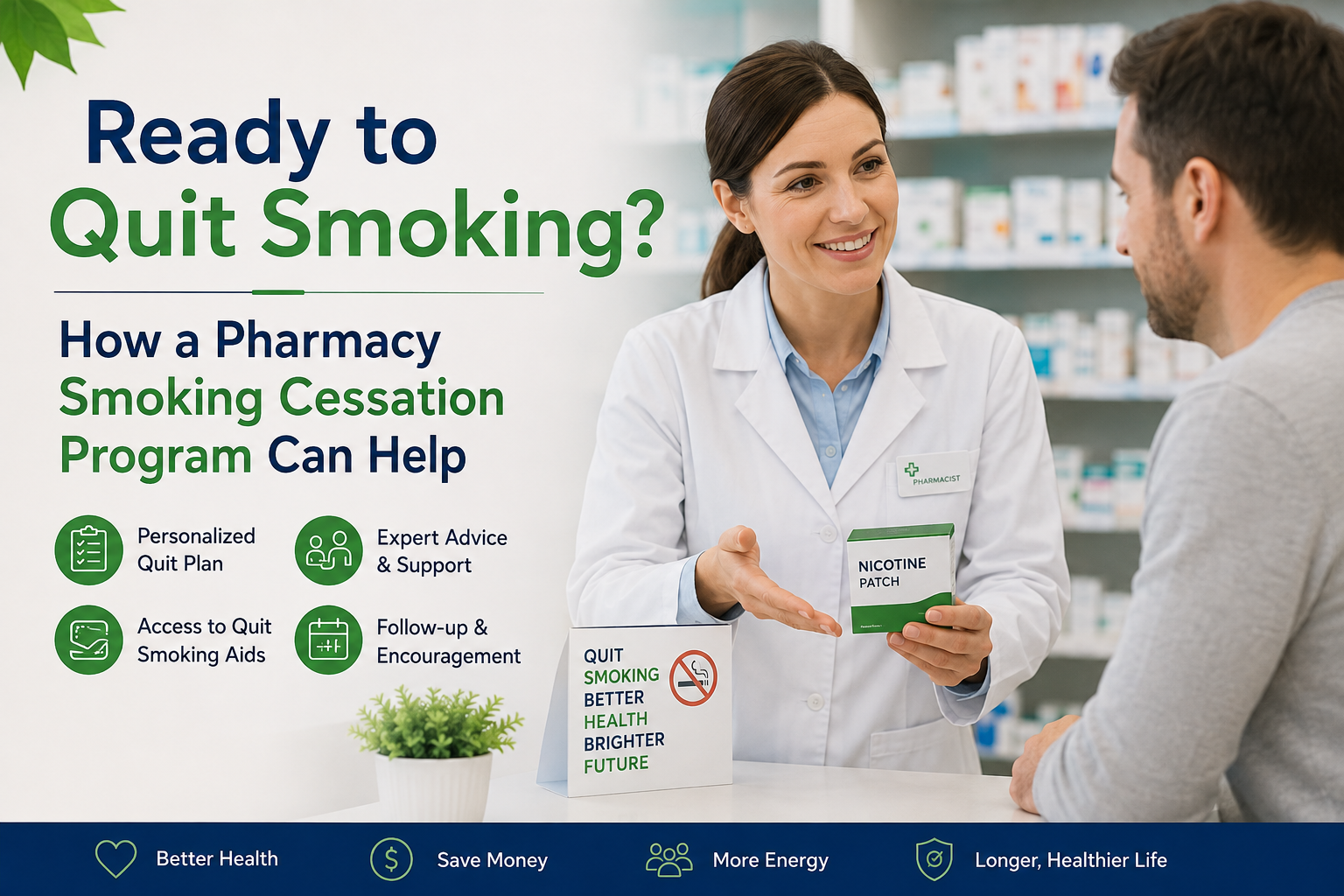
A pharmacy smoking cessation program can give you practical guidance, personalized support, and access to proven quit-smoking tools. For many people, having a pharmacist or trained pharmacy professional available makes the quitting process more structured and manageable.
What Is a Pharmacy Smoking Cessation Program?
A pharmacy smoking cessation program is a structured service offered through a pharmacy to help people stop smoking.
Depending on the pharmacy and program, support may include:
- Assessing your smoking habits and nicotine dependence
- Creating a personalized quit plan
- Discussing nicotine replacement therapy (NRT)
- Helping you understand medication options
- Identifying smoking triggers
- Providing strategies for managing cravings
- Monitoring your progress
- Offering follow-up support
- Helping you stay motivated after setbacks
The goal is simple: help you develop a realistic plan to stop smoking and provide support throughout the quitting process.
Why Is Quitting Smoking So Difficult?
Smoking isn’t simply a habit that can always be stopped through willpower.
Nicotine is addictive, meaning your brain and body can become accustomed to receiving it regularly. When you stop, withdrawal symptoms and cravings may appear.
Common challenges include:
- Strong nicotine cravings
- Irritability or frustration
- Difficulty concentrating
- Restlessness
- Changes in mood
- Trouble sleeping
- Increased appetite
- Stress-related urges to smoke
Your environment can also make quitting challenging. A morning coffee, work break, social gathering, or stressful situation may become associated with smoking.
A smoking cessation program can help you address both nicotine dependence and the everyday habits connected to smoking.
How Can a Pharmacy Help You Quit Smoking?
A pharmacy can provide convenient, accessible support without requiring you to navigate the quitting process alone.
- Your Pharmacist Can Help Assess Your Smoking Habits
A pharmacist may ask questions about how often you smoke, when you typically smoke, and what situations trigger cravings.
This information can help determine what type of quitting strategy may work best for you.
For example, someone who primarily smokes during stressful situations may need different strategies from someone who experiences strong nicotine cravings throughout the day.
- You Can Build a Personalized Quit Plan
A quit plan turns a general goal “I want to stop smoking” into practical steps.
Your plan may include:
- Choosing a quit date
- Identifying smoking triggers
- Removing cigarettes and tobacco products
- Planning for cravings
- Selecting appropriate quit-smoking aids
- Preparing for withdrawal symptoms
- Arranging follow-up support
Having a plan can make quitting feel less like an impossible challenge and more like a series of manageable steps.
- You Can Learn About Nicotine Replacement Therapy
Nicotine replacement therapy, commonly called NRT, provides nicotine without the harmful chemicals produced by burning tobacco.
Common forms include:
- Nicotine patches
- Nicotine gum
- Nicotine lozenges
- Nicotine sprays or inhalers in some markets
A pharmacist can explain how different options work and help you understand appropriate use based on your individual circumstances.
The right quit-smoking product can help manage nicotine cravings while you work toward becoming smoke-free.
What Happens During a Pharmacy Smoking Cessation Program?
The exact process varies between pharmacies, but many programs follow a similar structure.
Step 1: Initial Assessment
You discuss your smoking history, previous quit attempts, triggers, and goals.
Step 2: Quit Strategy
The pharmacist or cessation professional helps you choose a realistic approach and establish your next steps.
Step 3: Medication or NRT Guidance
If appropriate, you may discuss nicotine replacement products or prescription medications with a qualified healthcare professional.
Step 4: Craving Management
You’ll learn practical techniques for handling cravings and avoiding common triggers.
Step 5: Follow-Up
Regular check-ins can help you identify challenges, celebrate progress, and adjust your plan when necessary.
Ongoing support is important because quitting is a process not a single event.
Pharmacy Smoking Cessation vs. Quitting on Your Own
| Pharmacy Smoking Cessation Program | Quitting on Your Own |
| Structured quit plan | You create your own approach |
| Professional guidance | Limited or no professional support |
| Help choosing cessation products | You research products yourself |
| Support with cravings and triggers | You manage cravings independently |
| Follow-up may be available | Follow-up depends on you |
| Personalized recommendations | General information may be easier to find |
Which Option Is Better?
There isn’t one approach that works for everyone.
However, professional support can make quitting more structured, particularly if you’ve tried to quit before and struggled with cravings or withdrawal.
If you’ve attempted to quit multiple times without success, talking with a pharmacist, doctor, or other qualified healthcare professional may be a useful next step.
How Can You Handle Nicotine Cravings?
Cravings can feel intense, but they usually don’t last forever.
When a craving appears, try changing your environment or activity instead of immediately responding to the urge.
Useful strategies include:
- Drink water
- Take a short walk
- Practice slow, deep breathing
- Chew sugar-free gum
- Keep your hands busy
- Talk to someone supportive
- Leave a location where people are smoking
- Remind yourself why you decided to quit
Try the “Delay, Distract, Decide” Approach
Delay: Give yourself a few minutes before acting on the craving.
Distract: Do something that occupies your attention.
Decide: Reassess the craving after you’ve given yourself time.
A craving doesn’t have to determine what you do next.
What Are Common Smoking Triggers?
Understanding your triggers can make quitting easier because you can prepare for them before they happen.
Common triggers include:
- Morning routines
- Coffee or tea
- Alcohol
- Driving
- Work breaks
- Stress
- Social situations
- After meals
- Boredom
- Being around other smokers
Instead of simply saying, “I won’t smoke,” create a replacement behavior.
For example:
After dinner → take a short walk instead of smoking.
During a work break → drink water or chew gum.
When stressed → practice breathing exercises or contact someone supportive.
Replacing the routine can make it easier to break the connection between a situation and smoking.
What If You’ve Tried to Quit Before?
A previous unsuccessful attempt doesn’t mean you can’t quit.
In fact, previous attempts can teach you valuable information about your triggers, cravings, and challenges.
Ask yourself:
- What caused me to start smoking again?
- When were cravings strongest?
- Which strategies helped?
- Which situations were difficult?
- What would I do differently next time?
A setback can become useful information for your next quit attempt.
A pharmacy smoking cessation program can help you use those lessons to create a stronger strategy.
Can a Pharmacist Help With Quit-Smoking Medications?
Yes. Pharmacists can provide information and guidance about smoking cessation products and, depending on local regulations and the pharmacy’s services, may be able to recommend, supply, or support the use of certain cessation medications.
Some people may benefit from NRT, while others may need to discuss prescription options with a doctor or other healthcare professional.
Because medication suitability can depend on your health, medications, age, pregnancy status, and other factors, don’t assume that a particular quit-smoking medication is appropriate for you without professional advice.
7 Reasons to Consider a Pharmacy Smoking Cessation Program
A pharmacy-based program may be worth considering if you want:
- Convenient access to professional support
- A structured quitting plan
- Guidance on nicotine replacement options
- Help identifying your smoking triggers
- Practical strategies for managing cravings
- Follow-up during your quit attempt
- Encouragement when motivation becomes difficult
The biggest advantage may simply be having someone to turn to when quitting becomes challenging.
When Should You Start?
The best time to start preparing is now.
You don’t necessarily need to wait until you feel completely ready. Start by speaking with a qualified healthcare professional or pharmacy smoking cessation service about your options.
You can begin with a simple conversation:
“I’m thinking about quitting smoking. Can you help me make a quit plan?”
That first conversation can be the beginning of a major change.
Your Quit-Smoking Checklist
Before starting your quit attempt, consider preparing the following:
- Choose a quit date
- Write down your reasons for quitting
- Identify your biggest smoking triggers
- Tell supportive friends or family
- Remove cigarettes and tobacco products
- Discuss cessation options with a healthcare professional
- Prepare alternatives for common smoking routines
- Plan how you’ll handle cravings
- Arrange follow-up support
The Bottom Line: You Don’t Have to Quit Alone
Quitting smoking can be challenging, but professional support can make the process more manageable.
A pharmacy smoking cessation program can provide personalized guidance, help you understand cessation options, teach strategies for managing cravings, and give you ongoing encouragement as you work toward becoming smoke-free.
Whether you’re preparing for your first quit attempt or you’ve tried before, taking the next step matters.
Ready to quit smoking? Start by talking with your local pharmacist or a qualified healthcare professional about a smoking cessation plan that fits your needs.
Your first step doesn’t have to be perfect. It just has to be a step forward.